Lighting and light technology
Watts, lumens, lux and kelvins describe different lighting properties. LED supplies and compatibility with dimming methods add further distinctions. This section provides a straightforward starting point.
Light emitted is not the same as light falling on a work surface. Equal colour temperature does not mean equal colour rendering. Driver entries distinguish constant current and constant voltage to make specifications clearer.
How these terms connect
Lighting specifications, LED supplies and differences in dimming. The short definition supports quick lookup. Open an entry for its example, important distinctions and useful references. Related terms link to further entries in the glossary.
The linked guides explain applications in greater detail. This glossary explains terminology and replaces neither product documentation nor assessment of an actual installation.
Look up a term
10 terms found
C
Colour renderingColour rendering describes how illumination affects perceived object colours compared with a specified reference.
Metrics such as Ra or CRI summarise particular assessment methods. A single number does not capture every colour property or application.
Example
For workplace lighting, colour temperature and colour rendering may matter separately.
Important distinction
The same kelvin rating does not mean identical colour rendering. A high score also does not prove suitable glare control or illuminance.
Colour temperatureColour temperature or correlated colour temperature describes an aspect of the perceived colour of light. It is expressed in kelvins.
For many white sources, a lower value appears warmer and a higher value cooler. Real LED spectra are described using correlated colour temperature.
Example
Two white luminaires can have similar CCT yet render object colours differently.
Important distinction
Kelvins here do not express enclosure temperature or brightness. Colour rendering, luminous flux and chromaticity are additional properties.
Constant-current supplyA constant-current supply regulates output current to an intended value within its operating limits.
Required output voltage follows from the suitable connected load while the permitted range is respected. Load quantity and connection must match the driver.
Example
A suitably designed LED module can operate from a matching constant-current driver.
Important distinction
CC does not allow any arbitrary load. An unsuitable current can damage LEDs despite a seemingly suitable wattage.
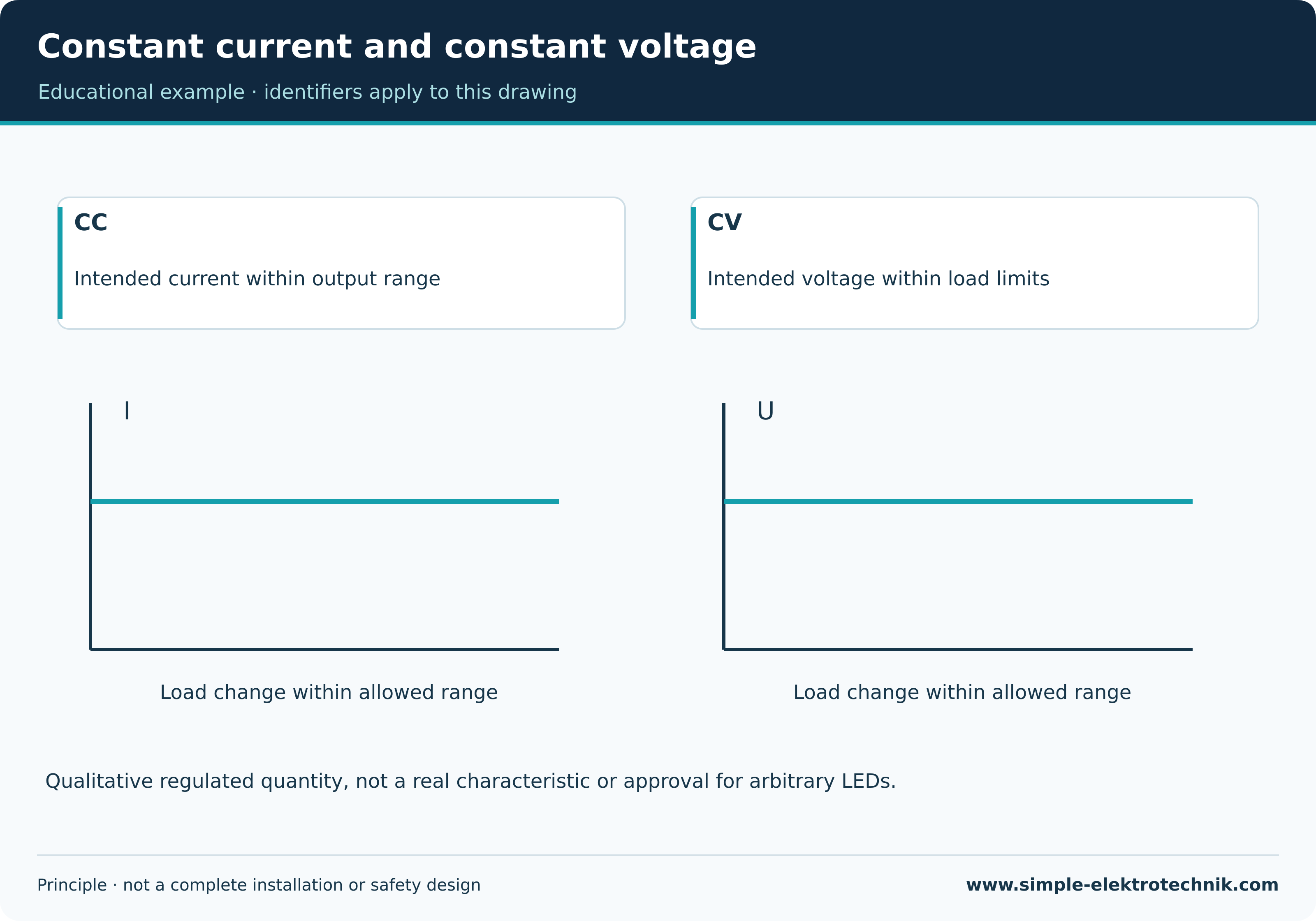
Constant-voltage supplyA constant-voltage supply regulates output voltage to its intended value within specified conditions.
Actual current depends on the suitable connected load. Current limit, power and load behaviour must suit the supply.
Example
An LED strip designed for a specified DC voltage may require a suitable CV supply.
Important distinction
A supply with higher available current does not automatically force that maximum through every load. Correct voltage and protection remain essential.
F
Flicker and temporal light modulationTemporal light modulation is variation of light output over time. Depending on waveform and observation, it can produce flicker or other visual effects.
Supply, driver and dimming method affect the waveform. Switching frequency alone does not describe every property or the complete visual effect.
Example
An unsuitable dimmer-driver combination may show visible brightness fluctuations at particular settings.
Important distinction
A smartphone camera image is not a general standards-based flicker measurement. The recording process can introduce additional bands or effects.
I
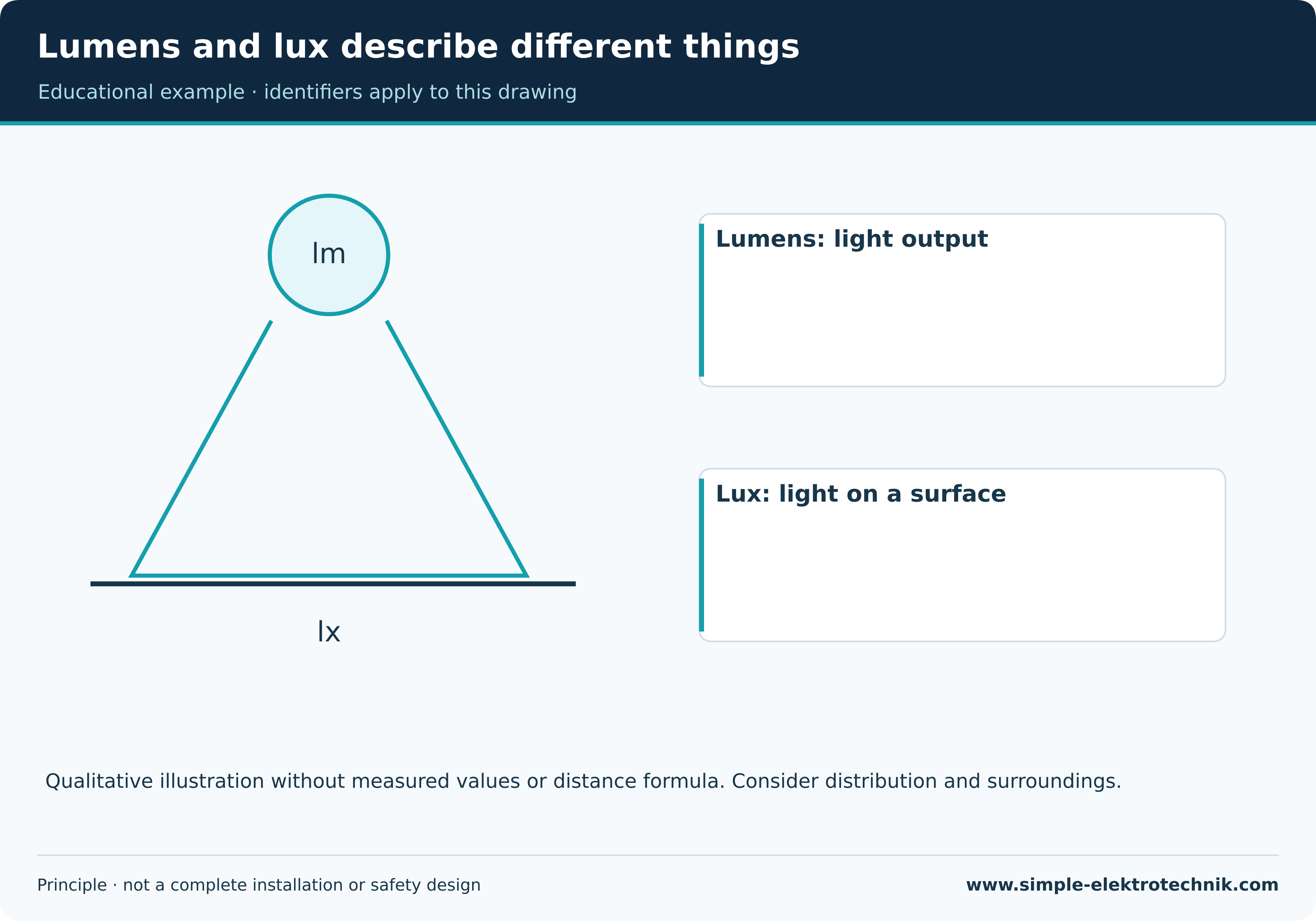
IlluminanceIlluminance describes incident luminous flux per unit area. Its unit is the lux.
One lux corresponds to one lumen per square metre in the relevant assessment. Illuminance concerns the illuminated location, not just the light source.
Example
If the same light output is spread over a larger area, average illuminance falls in a simplified uniform example.
Important distinction
One point reading does not automatically describe uniformity, glare or the complete quality of a lighting installation.
L
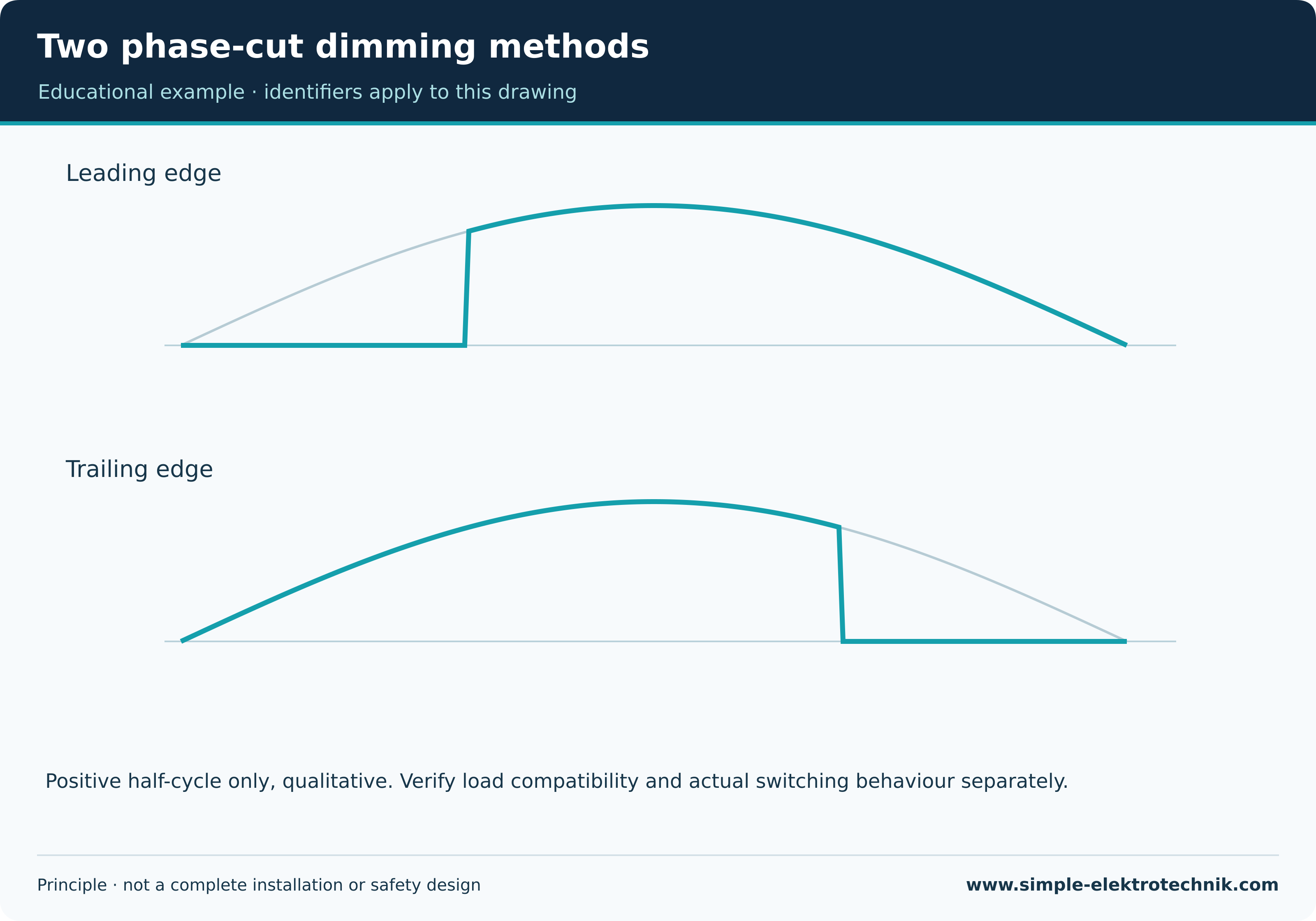
Leading-edge and trailing-edge dimmingThese dimming methods alter the effective waveform of an AC half-cycle by switching portions of it.
Leading-edge dimming delays conduction at the start of a half-cycle. Trailing-edge dimming turns conduction off before its end. Electronic loads must support the particular method.
Example
A dimmable LED supply may be approved only for particular dimmer types and load ranges.
Important distinction
Suitability does not follow from LED wattage alone. Minimum load, starting behaviour and manufacturer compatibility may matter.
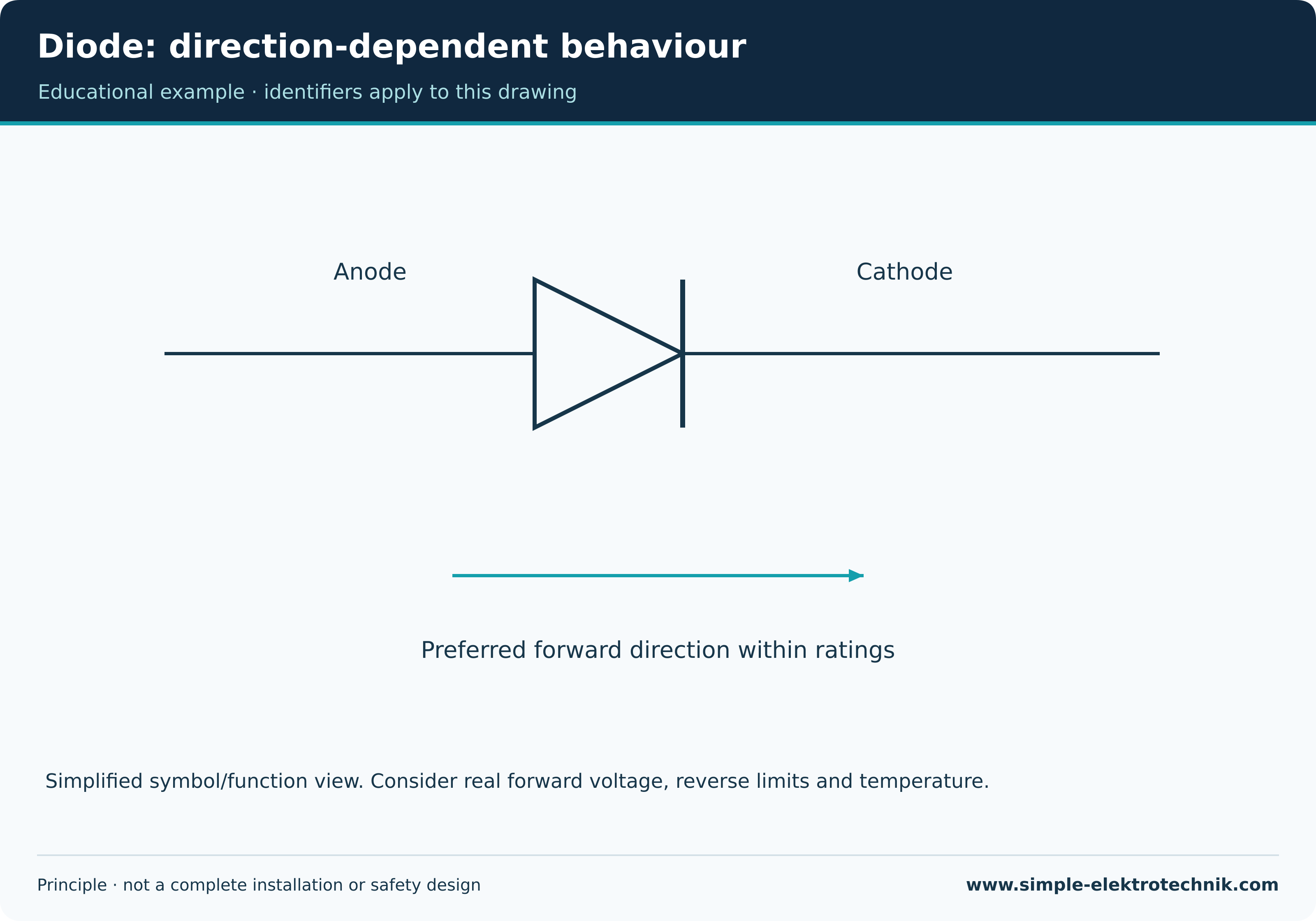
LEDAn LED is a semiconductor diode that emits light under suitable operation.
It needs a supply and current limiting or regulation suited to its characteristics. A complete LED lamp may already contain that electronics.
Example
An LED module for constant-current operation and a strip for a specified constant voltage need different supply concepts.
Important distinction
A bare LED is not an arbitrary load to connect directly to a voltage source. Dimmability depends on the complete equipment combination.
LED driverAn LED driver provides operating conditions suitable for its intended LEDs.
Important specifications include output mode, voltage or current range, power, isolation and control method. Driver and LED module need to match.
Example
A constant-current driver regulates its intended current within its specified output-voltage range.
Important distinction
A dimmable marking does not automatically identify the correct dimming method. A low output voltage also does not prove every required protective separation.
Luminous fluxLuminous flux is optical power weighted according to a specified visual response. Its unit is the lumen.
It helps compare emitted light. Electrical input in watts describes energy use and is not a direct brightness specification.
Example
Two lamps with the same wattage can emit different luminous flux.
Important distinction
Lumens alone do not show how well a work surface is illuminated. Distribution, distance and surroundings also matter.
No matching term. Try another spelling or select all topics.