

Smart heating and indoor climate control

Smart heating should match room use and reduce avoidable operation. Schedules, room sensors and window contacts may help, but they must suit the existing heating system. A radiator valve and a heat-pump controller perform different jobs.
A good arrangement maintains appropriate comfort, supports manual adjustment and explicitly handles missing measurements. Failure to detect a person is not a safe reason to let a home cool indefinitely.
Separate room control from heat generation

A radiator thermostat influences water flow through the radiator. A room controller compares actual and target temperature. The heating plant produces and distributes heat using its own control strategy. These layers need coordination.
Closing room valves while another controller requests heat can create an unsuitable overall arrangement. Minimum flow, pump operation, balancing and manufacturer requirements are not replaced by an app. Changes to central controls and electrical connections need competent planning.
Radiators respond differently from slow surface-heating systems. Frequent large setpoint changes may offer little benefit with slow response. Do not repeatedly cut power to a boiler or heat pump through an ordinary smart plug. Use intended interfaces and retain protective functions.
Setpoint, measurement and demand
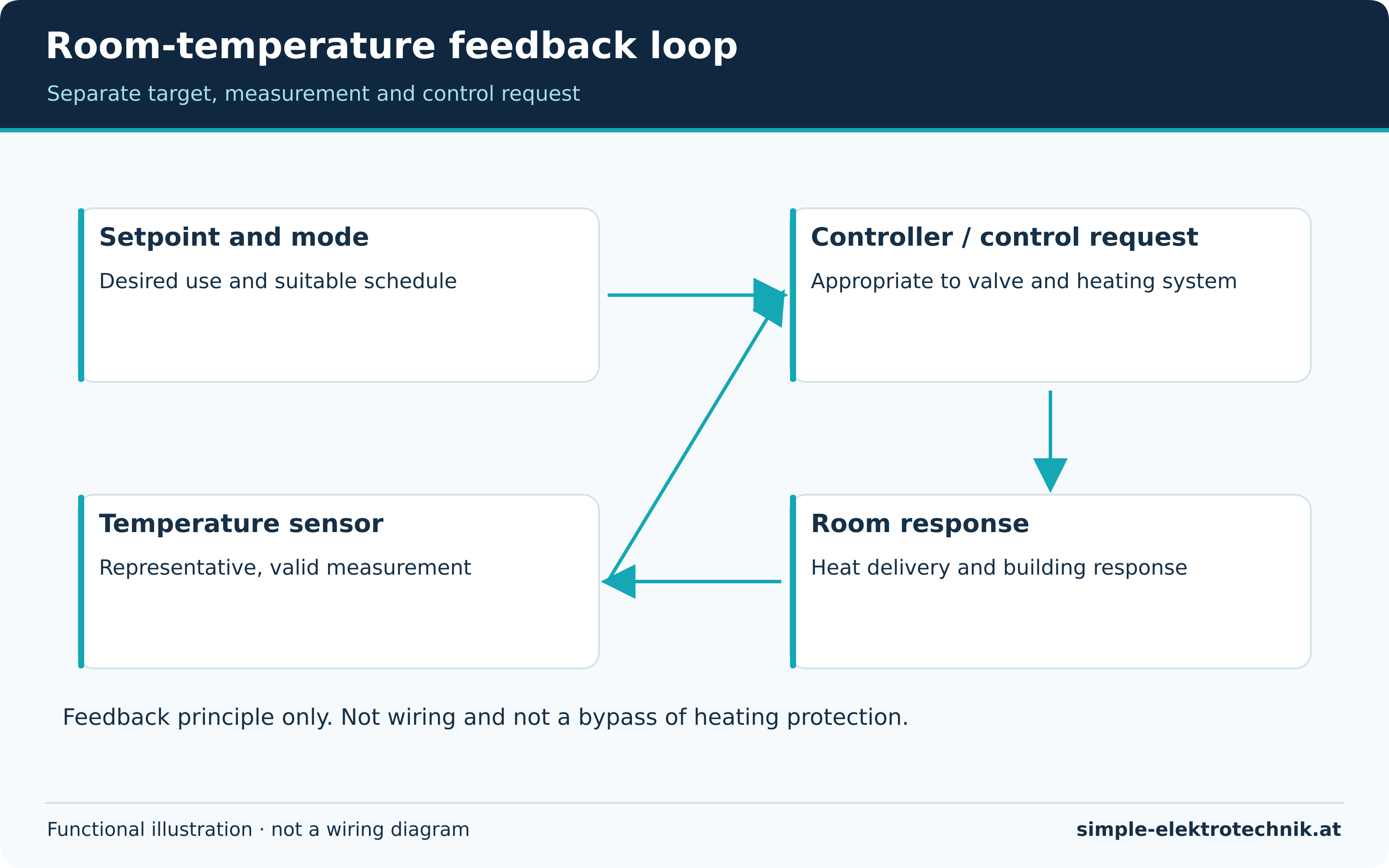
The feedback diagram shows a sensor reporting temperature, comparison with the setpoint and a suitable control request. The room responds over time before the next measurement. It is a functional illustration, not wiring for a valve or heat source.
A setpoint is a target, not a promise of immediate room temperature. A heating-demand indication also does not necessarily mean the heat source is currently running. Establish what feedback the system provides.
Locate sensors where measurements represent the occupied area. Sun, curtains, radiator heat and draughts can affect readings. A sensor beside a radiator does not automatically measure conditions at a seating position. An offset cannot fully correct a fundamentally unsuitable location.
Schedules and operating modes

Use a few understandable periods for ordinary use, reduced demand and longer absence. Appropriate temperatures and setbacks depend on building, moisture, occupants and heating technology. No universal room setpoint is prescribed here.
| Situation | Possible control approach | Important check |
|---|---|---|
| Regular occupancy | Suitable weekly schedule | Lead time and real room response |
| Briefly opened window | Appropriate time-limited reaction | Sensor failure, recovery and protective functions |
| Several days away | Suitable absence mode | Frost, moisture and necessary minimum conditions |
| Manual adjustment | Temporary change | Clearly defined return to the schedule |
Avoid several routines repeatedly writing opposing setpoints. One shared mode with clear priorities is easier to maintain than many independent on/off rules. The automation guide explains this approach.
Using window contacts sensibly
A contact reports an opening, not the complete ventilation requirement or outdoor conditions. A brief opening should not cause uncontrolled prolonged setback. Delays and an explicit recovery rule may help where appropriate to the heating system.
Treat unavailable or stale readings as a distinct state. Unknown must not silently mean permanently open or definitely closed. Plan a suitable fallback and notification.
Comfort routines must not disable heating protection. A menu label called frost protection does not guarantee every vulnerable pipe is protected.
Humidity and ventilation
Relative humidity depends on temperature. One percentage does not explain every ventilation situation. Outdoor conditions and surface temperatures may also matter.
A CO₂ sensor can provide information about ventilation but is not automatically a carbon-monoxide alarm. Warning devices must suit their actual task. Smart-home notifications do not replace required local warning functions.
Automatic ventilation and cooling follow their equipment requirements. A simple humidity threshold is not complete protection against mould or building damage.
Test operation and assess the benefit

Test schedule transitions, manual adjustment, absence, window opening and missing sensor data. Observe whether rooms respond evenly and in time. Change settings individually and record effects instead of moving several parameters each day.
Consumption comparisons need similar conditions. Warmer weather after an installation change does not prove savings. The energy guide separates heat demand, electricity and cost.
Common questions
Will smart thermostats improve any heating installation?
Not automatically. Valves, control, communications and the overall strategy must suit the system. Existing well-adjusted controls may already work effectively.
Does a higher target always heat the room faster?
No. Controller, valve and heat supply determine response. An unrealistic target can cause unnecessary overheating later.
Must heating stop when the internet fails?
Not with suitable local control. Nevertheless, test cloud loss, controller loss and restart separately. Applicable installation requirements remain those of the actual country.
Sources and further information
Electrician's tools
The linked products illustrate different cutting, stripping and testing tasks. Affiliate links can generate commission; check the exact model and supplied version before purchase.
Select tools for the task, material and electrical conditions. Price or brand alone does not establish suitability or safe use.
Compare the manufacturer's specifications rather than rely on a general claim of best quality or value.
If the table is wider than the screen, swipe or scroll sideways to view every column.
 |
|
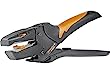 |
Weidmüller stripax stripping and cutting tool, 9005000000
|
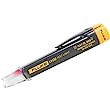 |
Fluke LVD2 non-contact AC detector with torch
|
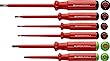 |
PB Swiss Tools PB 5543 electrician's screwdriver set
|
 |
Fluke T130 two-pole voltage and continuity tester
|
Explore the Electrician's Tools guide for the purposes and limitations of the existing cutting, stripping and testing tools. Check the actual model and task before selecting or using equipment.
Read more