

Electrical hazards: effects and protection
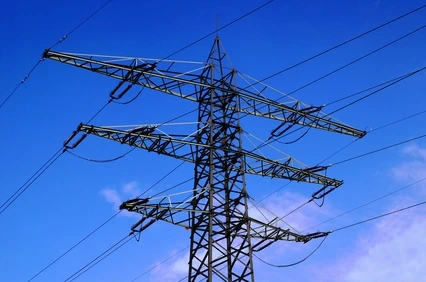
Electric current can affect nerves and muscles, interfere with breathing and cause life-threatening heart rhythm disturbances. Electrical accidents can also cause burns, arc injuries and secondary injuries such as falls. High voltage is not needed: an ordinary 230-volt mains supply can be fatal.
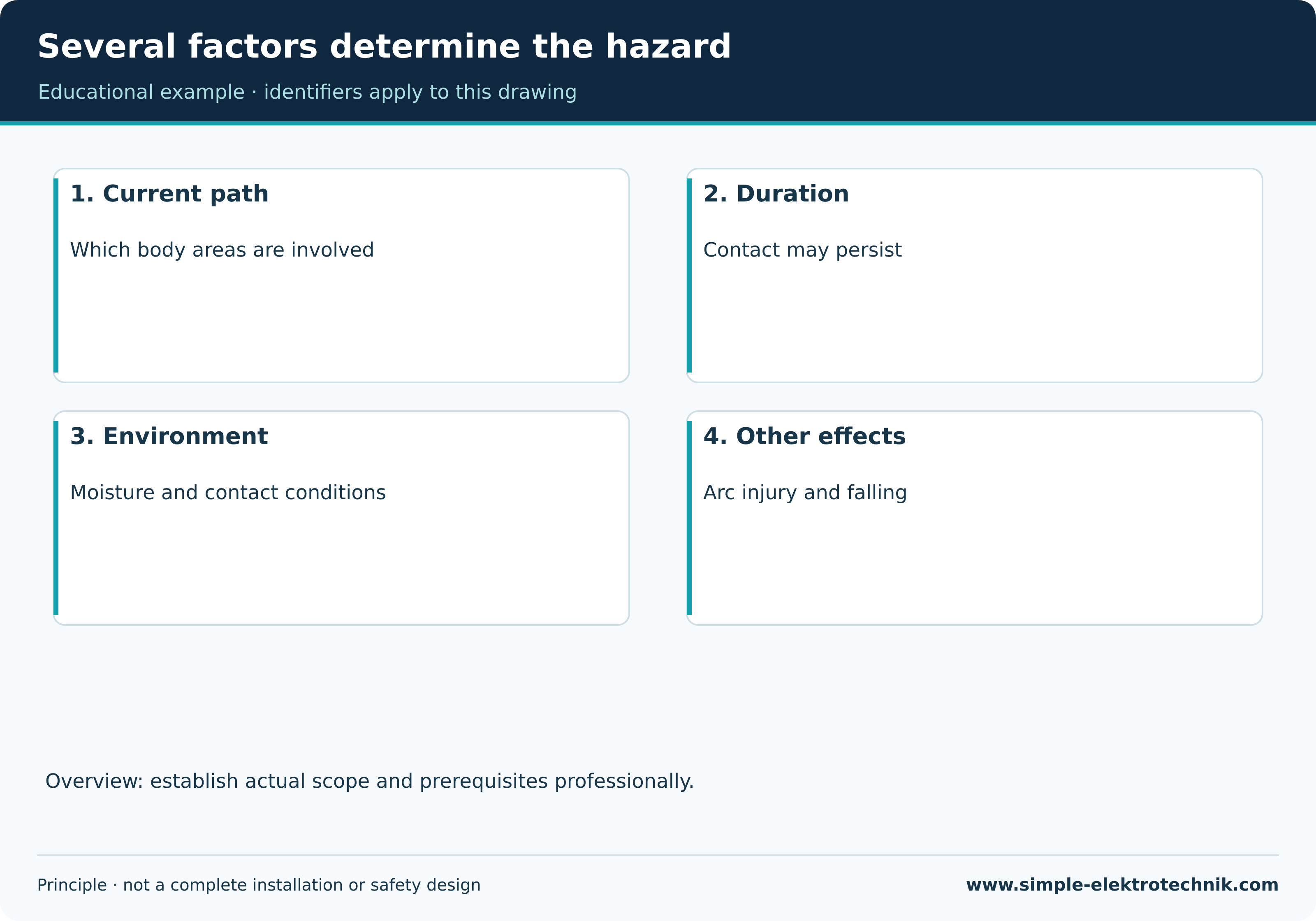
The severity of an electrical accident depends on more than voltage. The current actually passing through the body, its path and the duration of exposure are especially important. Never touch a conductor to find out whether it is live.
What happens during an electric shock?

Current can pass through the body when it forms a conductive connection between different electrical potentials. For example, a person might touch an exposed line conductor while connected to earth through the floor. The body can also complete a circuit between two live conductors.
Possible consequences include:
- Nerve and muscle effects: pain, involuntary movement and muscle contraction. Someone gripping a conductive object may be unable to let go.
- Heart and breathing problems: current can disturb the heart’s natural electrical activity. Ventricular fibrillation is a life-threatening rhythm in which the heart no longer pumps effectively. Breathing may also stop.
- Tissue injury: electrical exposure can damage skin and deeper tissues. Small marks, or no obvious external injury, do not prove that the incident was harmless.
- Secondary injuries: a startle response or muscle movement can cause a fall. On a ladder, even brief contact can lead to a serious accident.
Someone who is responsive again after a shock is not necessarily uninjured. Current passing through the body requires prompt medical assessment.
What determines the risk?
Current and exposure time
The relevant quantity is body current: the current actually passing through the person. This is different from the current an appliance draws in normal operation. Even currents measured in milliamperes can produce dangerous effects.
Duration matters too. Involuntary gripping can prolong contact. Rapid disconnection can reduce risk, but it does not make the preceding exposure harmless. There is no general table of touch durations that guarantees safety in every situation.
The path through the body
The current path determines which parts of the body are affected. Hand-to-hand and hand-to-foot contact can involve the chest. A path involving the heart is particularly critical, but other contact arrangements must not be treated as safe.
Voltage, skin and surroundings
Voltage drives current through the available conductive path. The amount of current depends on skin condition, contact area, pressure and the surroundings, among other factors. Wet or damaged skin and conductive surroundings can increase the danger.
The body does not have a fixed resistance. For AC, body impedance is the more precise term because frequency-dependent properties also matter. The simplified relationship I = U/R helps explain voltage, current and resistance; an assumed body resistance cannot establish a safe touch condition.
Alternating and direct current
Current type and frequency affect the body’s response. Mains-frequency AC can seriously interfere with nerves, muscles and heart function. This does not make DC harmless: it can also cause severe injury and burns.
Several factors determine the hazard
At what voltage does electricity become dangerous?
A single number cannot reliably answer this. The often-quoted values of 50 volts AC and 120 volts ripple-free DC belong to particular electrical protection arrangements. They are not universal dividing lines between harmless and fatal contact.
Conditions, the supply and the protective measures all matter. Wet or highly conductive locations differ from dry surroundings. Even low-voltage, high-energy batteries can cause dangerous heating and short-circuit injuries.
“Low voltage” does not mean “low risk”. Ordinary household mains installations are low-voltage systems, yet they can cause fatal electrical accidents.
Direct and indirect contact
Direct contact means touching a part that is live in normal operation, such as an exposed terminal. Insulation, barriers and enclosures normally prevent access. This is part of basic protection.
Indirect contact means touching an accessible conductive part made hazardous by a fault. For example, damaged insulation can make a metal appliance enclosure live. Suitable protection must address that fault condition, such as protective earthing and automatic disconnection in an installation designed to use those measures.
The appropriate arrangement depends on the equipment and installation. See protective measures and equipment protection classes for more detail.
Arc hazards: injury without touching
An electric arc is a discharge through gas that has become conductive, usually air. An unintended arc fault can occur during an installation fault. Heat, intense radiation, hot particles and pressure effects can cause severe injury.
At high voltage, approaching too closely can allow a flashover. Do not touch or investigate overhead lines or fallen conductors. Keep away, warn others and let the responsible emergency services and network specialists secure the area.
What provides protection – and what are its limits?
Protection relies on suitable equipment, effective insulation, appropriate protective arrangements and safe working procedures. Being careful cannot replace those measures.
A residual current device, or RCD, detects an imbalance between currents in its monitored live conductors. If current returns by another route, it can disconnect under its specified operating conditions. It does not detect a person directly and cannot prevent every electric shock.
For example, hazardous line-to-neutral contact may not produce the residual current needed to operate the device. A 30 mA rating does not mean that the RCD limits current through a person to 30 mA. An ordinary circuit-breaker primarily protects wiring against overcurrent; it does not replace appropriate protection against electric shock.
The article on residual current devices explains their operation and limitations.
Before electrical work, a safe dead condition must be established, verified and maintained using the appropriate procedures. An ordinary light switch being off, or an appliance working normally, is not proof. See the five safety rules. Live working is a separate specialist method; this website does not authorise it.
What should you do after an electrical accident?
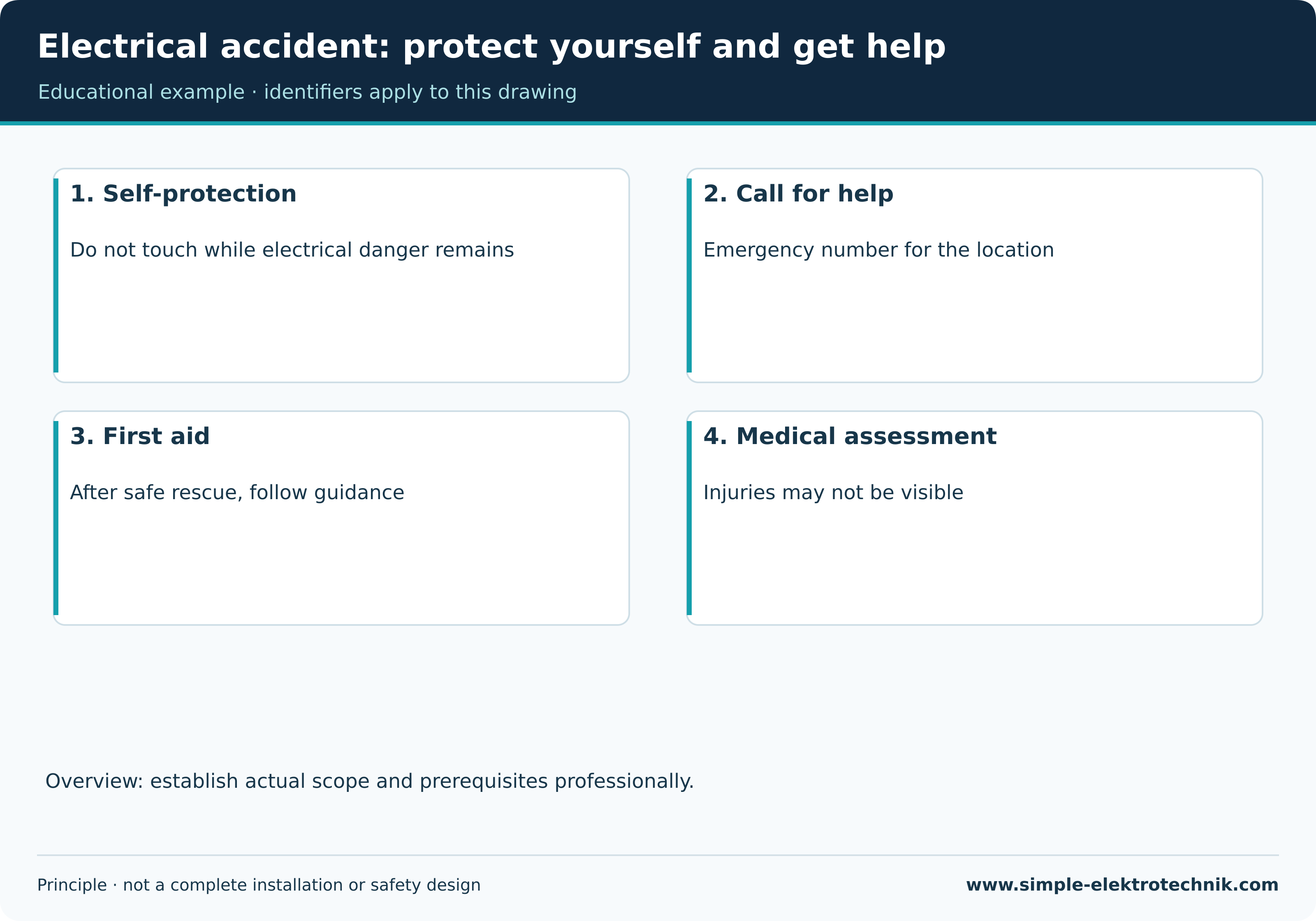
Protect yourself first. Do not touch someone who might still be in contact with an electrical source. Operate a safely accessible means of switching off if this can be done without putting yourself at risk. Do not handle exposed electrical parts. Keep away from high-voltage hazards and leave rescue to specialists until they have made the area safe.
Once access is safe, or in parallel through other helpers:
- Call for help. Give the location and explain that electricity is involved. Ambulance emergency numbers are 144 in Austria, 112 in Germany and 144 in Switzerland. Call immediately for unconsciousness, abnormal breathing, chest symptoms, burns or a serious incident. Contact the emergency dispatcher if unsure.
- Check responsiveness and normal breathing. If the person is unconscious but breathing normally, place them in the recovery position and continue monitoring breathing.
- Start CPR immediately if the person is unresponsive and not breathing normally. Ask someone to bring an available AED and follow its instructions and the dispatcher’s guidance. Gasping is not normal breathing. The Austrian Red Cross resuscitation guide provides further instruction in German.
- Stay with the person and arrange medical assessment. After current has passed through the body, obtain prompt medical assessment even if symptoms initially appear minor. The affected person should not drive themselves. Medical staff decide whether further monitoring is needed.
This overview does not replace first-aid training. Its main purpose is to prevent a second casualty and ensure that electrical injuries are taken seriously.
Electrical accident: protect yourself and get help
Common questions
Is a brief 230-volt shock harmless?
No. Short duration alone does not establish that. Current passing through the body requires medical assessment, even without obvious injury.
Can I rely on dry shoes or household gloves?
No. Ordinary clothing and household items are not verified electrical protective equipment. Suitable protective measures and safe working procedures are what matter.
Can I keep using damaged equipment if it still works?
No. A damaged cable, loose plug or broken enclosure can compromise protection. Safely take the equipment out of use and arrange proper inspection or repair. Adhesive tape is not a proper repair for a damaged mains lead.
Do not infer safety from one feature
Absence of visible damage, brief contact or initially mild symptoms cannot reliably exclude injury. Response after current has passed through the body involves safe rescue, medical assessment and emergency dispatcher guidance where necessary.
An illustration cannot authorise a safe everyday contact zone. The new graphics explain influencing factors and the broad sequence of self-protection and help. They replace neither first-aid training nor individual medical decisions.
Related safety and testing guides explain protective measures and suitable verification. An RCD alone does not make touching live parts safe.
Continue learning
Electrical safety: scope, competence and precautions
Put electrical safety first.
- These explanations and simplified diagrams support learning. They are not complete installation designs, site-specific risk assessments or a substitute for competent professional assessment.
- Electrical work can be life-threatening. It requires the competence and authorisation appropriate to the actual task, installation and jurisdiction.
- Errors and omissions can occur. Check the actual equipment documentation, applicable requirements and the complete installation before relying on an example; a working device is not proof of electrical safety.
- Personal protective equipment must suit the assessed hazards and task. It does not replace isolation, appropriate tools, competence or a safe system of work.
- Do not work on exposed live parts on the basis of these guides. Identify every relevant source, isolate it, secure against reconnection and prove dead using suitable equipment and procedures before access.
- Responsibilities for design, installation and verification must be established for the actual work. A website statement does not determine liability or remove duties under applicable law.
- This summary is not exhaustive. Where the circuit, condition or protective arrangement is uncertain, obtain suitable professional assistance before work proceeds.
- Complete the required inspection, testing and documentation before use, and maintain the installation and equipment appropriately.