

Understanding earthing and protective bonding

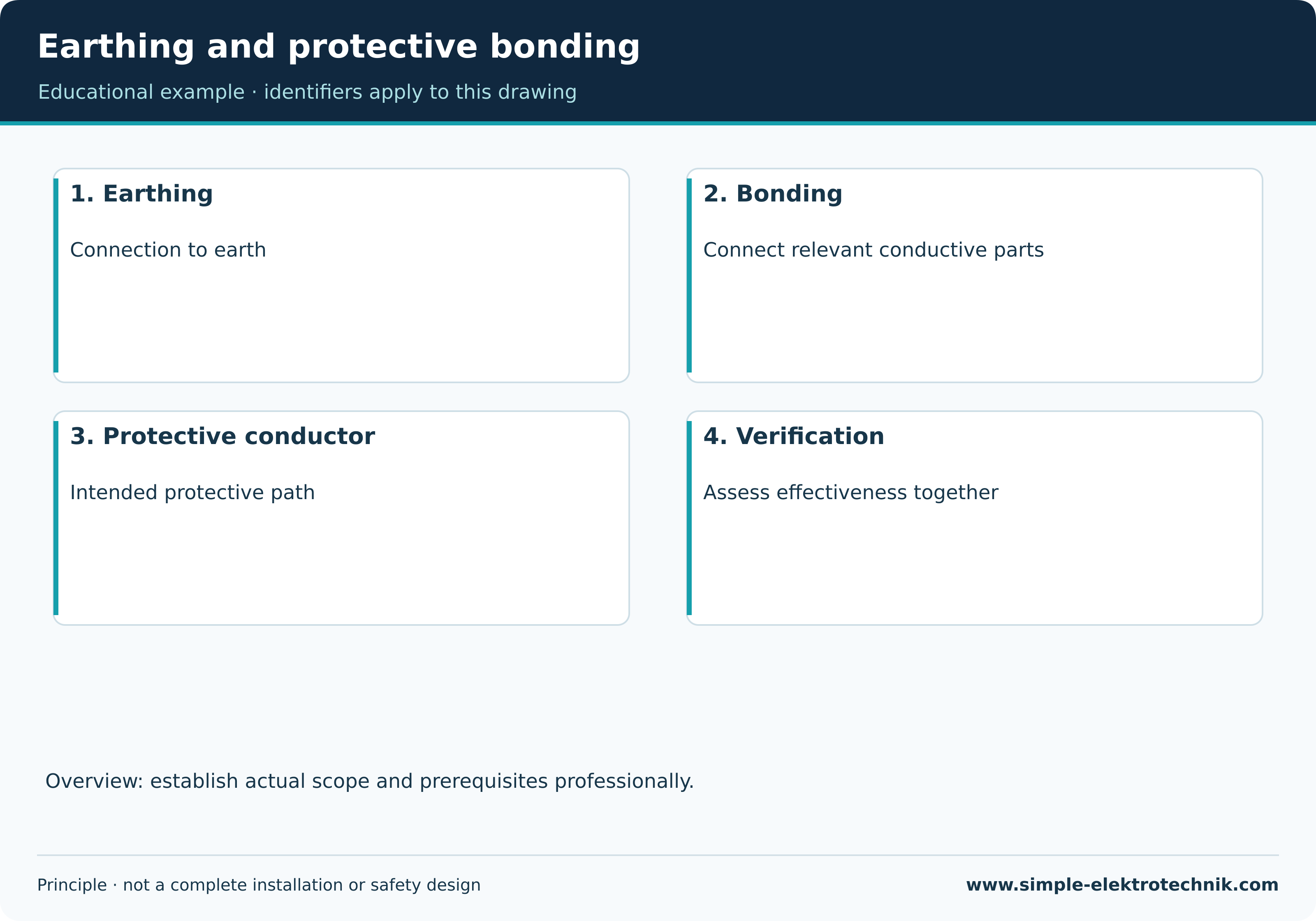
Earthing connects an installation or designated parts to earth. Protective bonding connects relevant conductive parts to limit dangerous potential differences. These tasks are related but are not identical.
A metal part is not safe merely because an electrode exists somewhere in the building. Intended connections, earthing arrangement, protective measures and verified effectiveness matter.
Earth and potential

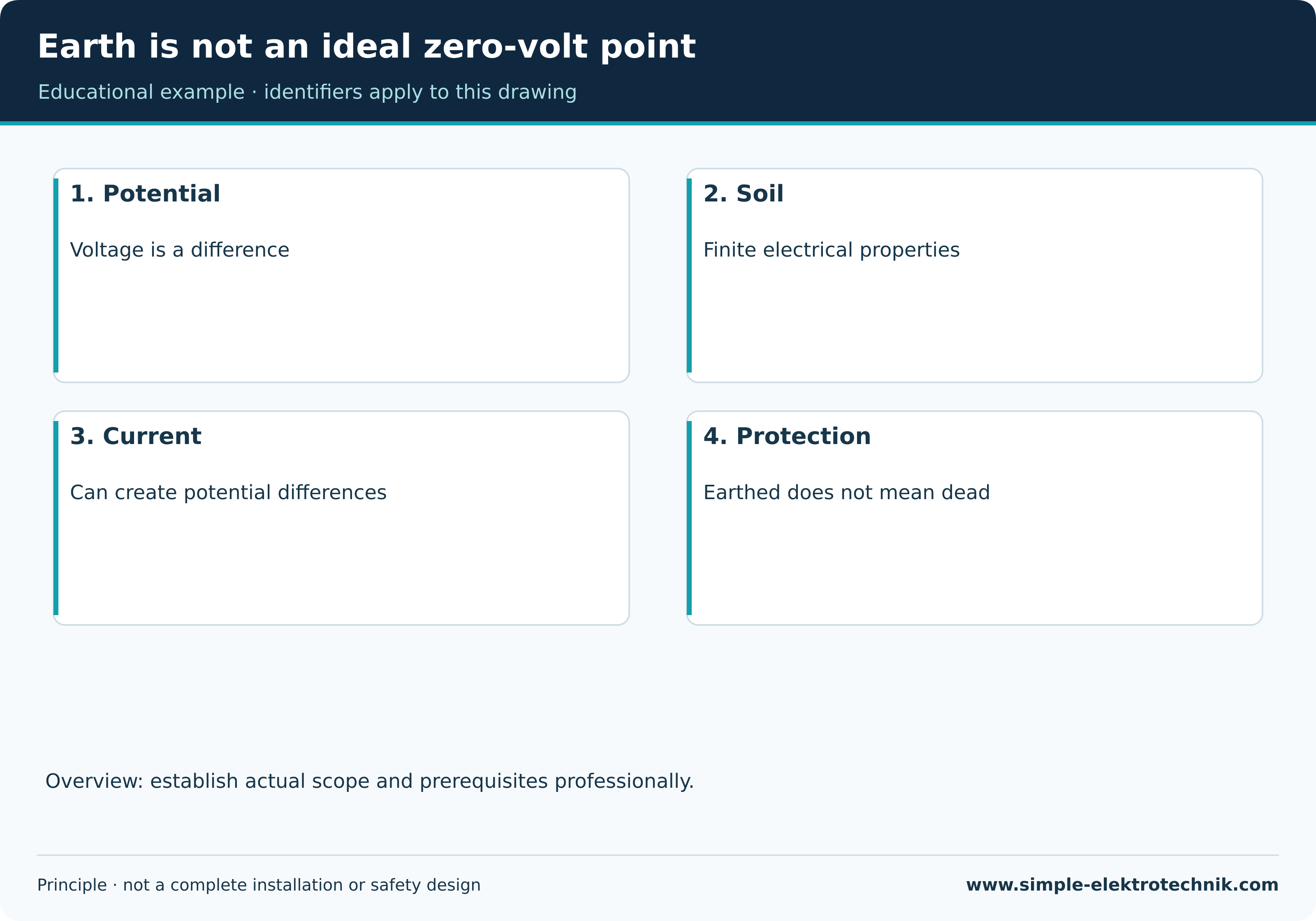
Voltage is a difference in potential. Accessible parts can become hazardous when a person bridges a relevant voltage between them, even when one is casually described as earthed.
Soil is not an ideal conductor at exactly the same potential everywhere. Current near electrodes can create potential differences. Earthing therefore does not automatically eliminate every touch or step-voltage hazard.
Earth is not an ideal zero-volt point
Main elements
| Element | Purpose |
|---|---|
| Earth electrode | Intended electrical contact with soil |
| Earthing conductor | Connection from a designated earthing point to the electrode |
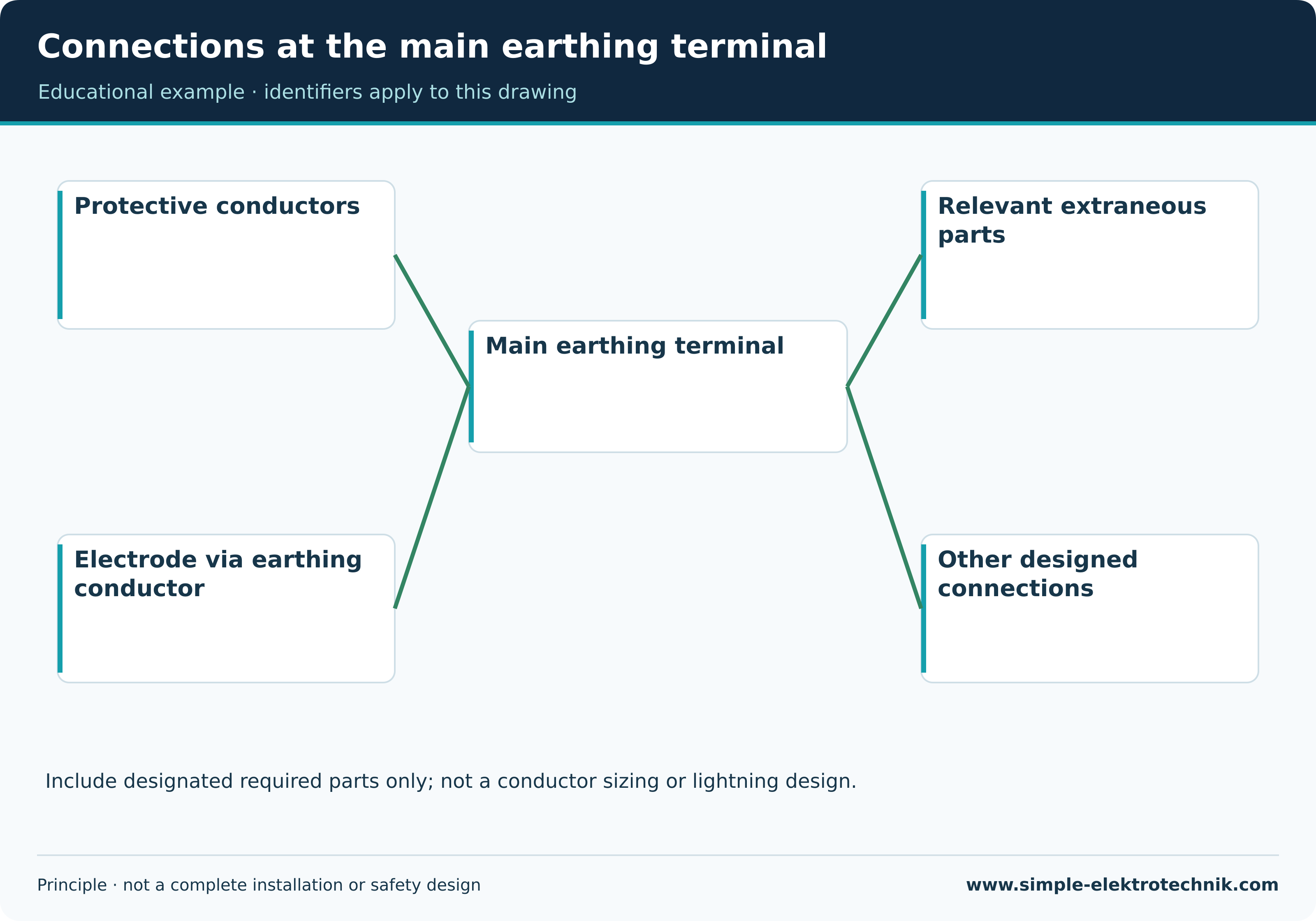
| Main earthing terminal | Common connection point for designated earthing and protective connections |
| Protective conductor | Protective connection to designated conductive parts |
| Protective bonding conductor | Connects relevant conductive parts into protective bonding |
Which parts require inclusion depends on their actual nature and applicable requirements. Not every metallic-looking part is automatically an extraneous conductive part requiring bonding.
Connections at the main earthing terminal
Protective conductors and bonding
A protective conductor may connect a designated Class I enclosure to the protective conductor system. Protective bonding additionally addresses relevant conductive parts capable of introducing a potential.
The intended connection must exist physically, not only on the drawing. Terminals, routes and joints must suit the task and be verified. Corrosion, looseness and alterations can impair effectiveness.
Earthing and protective bonding
Water pipes are not arbitrary replacement electrodes
A metal pipe is not automatically an acceptable substitute electrode. Plastic sections, meters or repairs can change continuity. Protection cannot rely on an unverified assumption.
Do not use random services as experimental earthing points. Earthing selection and construction require professional design. The illustrations describe roles, not universal conductor sizes or connection approvals.
TN and TT context
In a TN example, the metallic protective path to the earthed source is important. In TT, installation exposed conductive parts connect to the intended earthing arrangement; assessment considers its fault path and suitable protection.
One favourable electrode resistance does not prove every protective connection. Identify the actual earthing arrangement. The TN, TT and IT guide explains the differences.
Protective earth, functional earth and lightning protection
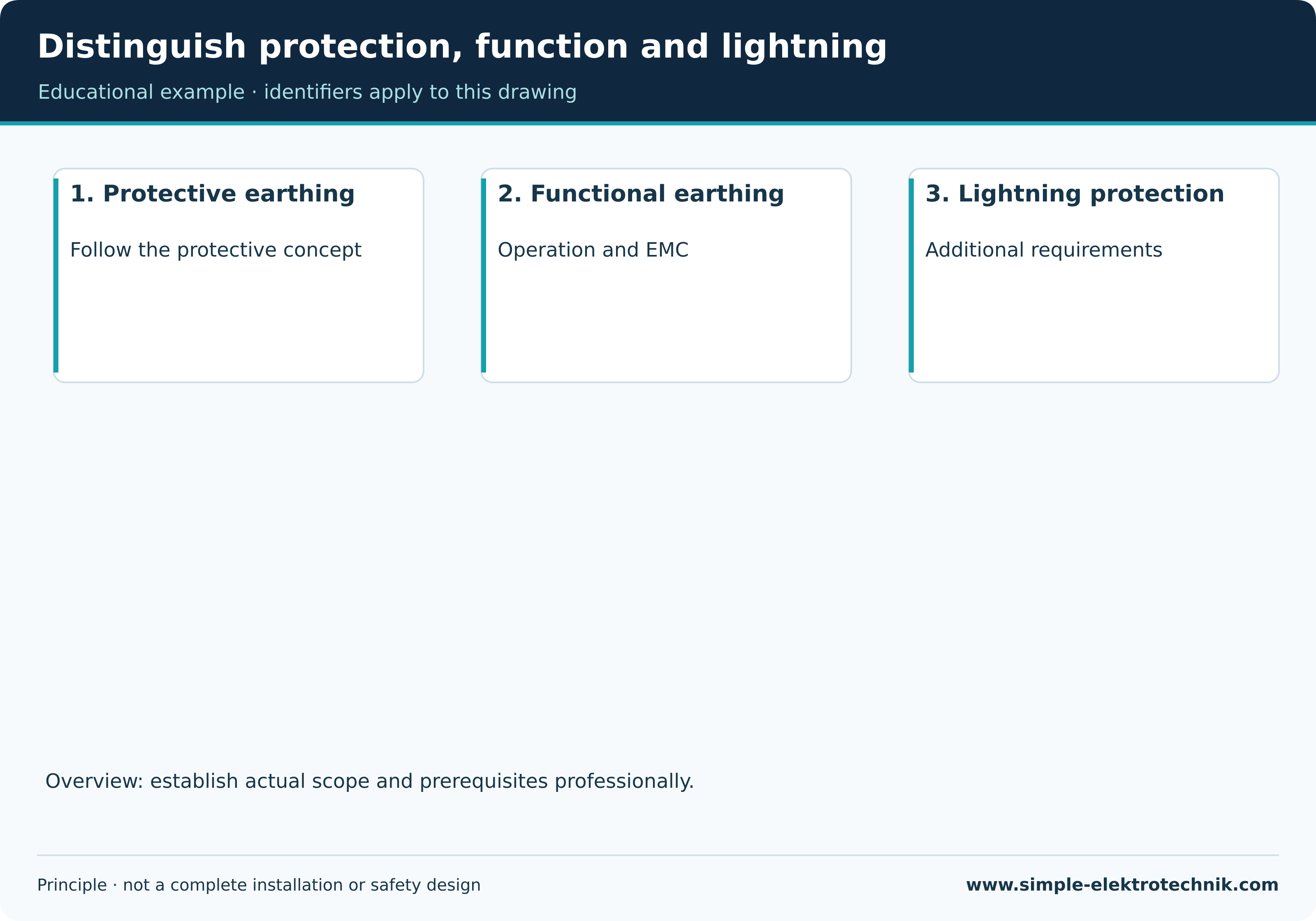
Functional earthing serves operational or EMC purposes and is not automatically equivalent to protective earthing. Electronics may have specific manufacturer requirements.
Lightning and surge protection involve additional tasks and provisions. A simplified main earthing terminal illustration is not a complete lightning protection design. Professional coordination remains necessary.
Distinguish protection, function and lightning
Verify and document
Assess construction, condition and required tests. Continuity of a connection and resistance to soil are different questions. A multimeter reading between random metal parts is not universal evidence of effective earthing.
After changes, check affected connections and documents. Replacing pipework must not silently invalidate an assumed protective path. Records should identify the actual intended arrangement.
Common questions
Must every metal object be connected?
There is no universal answer. Function, possible introduction of potential and applicable requirements determine assessment.
Does earthed mean dead?
No. Connection to earth is not the same as professionally proving absence of voltage.
Can an RCD replace required earthing or PE?
No. It does not replace other connections and evidence required by the protective concept.
Continue learning
Sources and technical context
The references support basic principles; they do not replace assessment of the actual installation.