

Protection and electrical safety

Protection against electric shock comes from a suitable coordinated concept. Insulation, protective conductors, protective devices and verification serve different roles. This section helps identify those terms and common confusions.
RCD, RCCB and RCBO are explained separately. We also distinguish protection class from IP rating, and earthing from bonding. These explanations support understanding; actual work needs suitable competence and a procedure for the real installation.

How these terms connect
Distinguish protective concepts, protective devices and safe working. The short definition supports quick lookup. Open an entry for its example, important distinctions and useful references. Related terms link to further entries in the glossary.
The linked guides explain applications in greater detail. This glossary explains terminology and replaces neither product documentation nor assessment of an actual installation.
Look up a term
20 terms found
A
Additional protectionAdditional protection supplements the intended fundamental protective measures in specified applications.
A suitable RCD can form part of this concept. The additional measure required depends on application, national requirements and actual protective design.
Example
For particular circuits, an RCD is used in addition to the other required protective measures.
Important distinction
Additional protection does not permit omission of basic protection, a required PE or correct construction. The measures serve different functions.
B
Basic protectionBasic protection protects against electric shock under normal, fault-free conditions. Hazardous live parts should not be accessible.
Suitable insulation, barriers or enclosures can provide this function. Their suitability depends on construction, environment and intended use.
Example
The core insulation of an intact suitable cable prevents direct contact with conducting material.
Important distinction
Basic protection alone does not describe the complete concept under an insulation fault. Fault protection or an appropriate enhanced measure is also needed.
D
Disconnecting suppliesDisconnecting supplies means separating the relevant installation or work area from the applicable electrical sources.
The work area and possible additional sources must be known. Securing against reconnection and verifying absence of voltage are separate further steps.
Example
PV, storage, UPS or separately supplied control circuits may need consideration alongside the normal supply.
Important distinction
An off command from an app, pushbutton or control does not prove safe isolation. Operational and isolating functions are different.
E
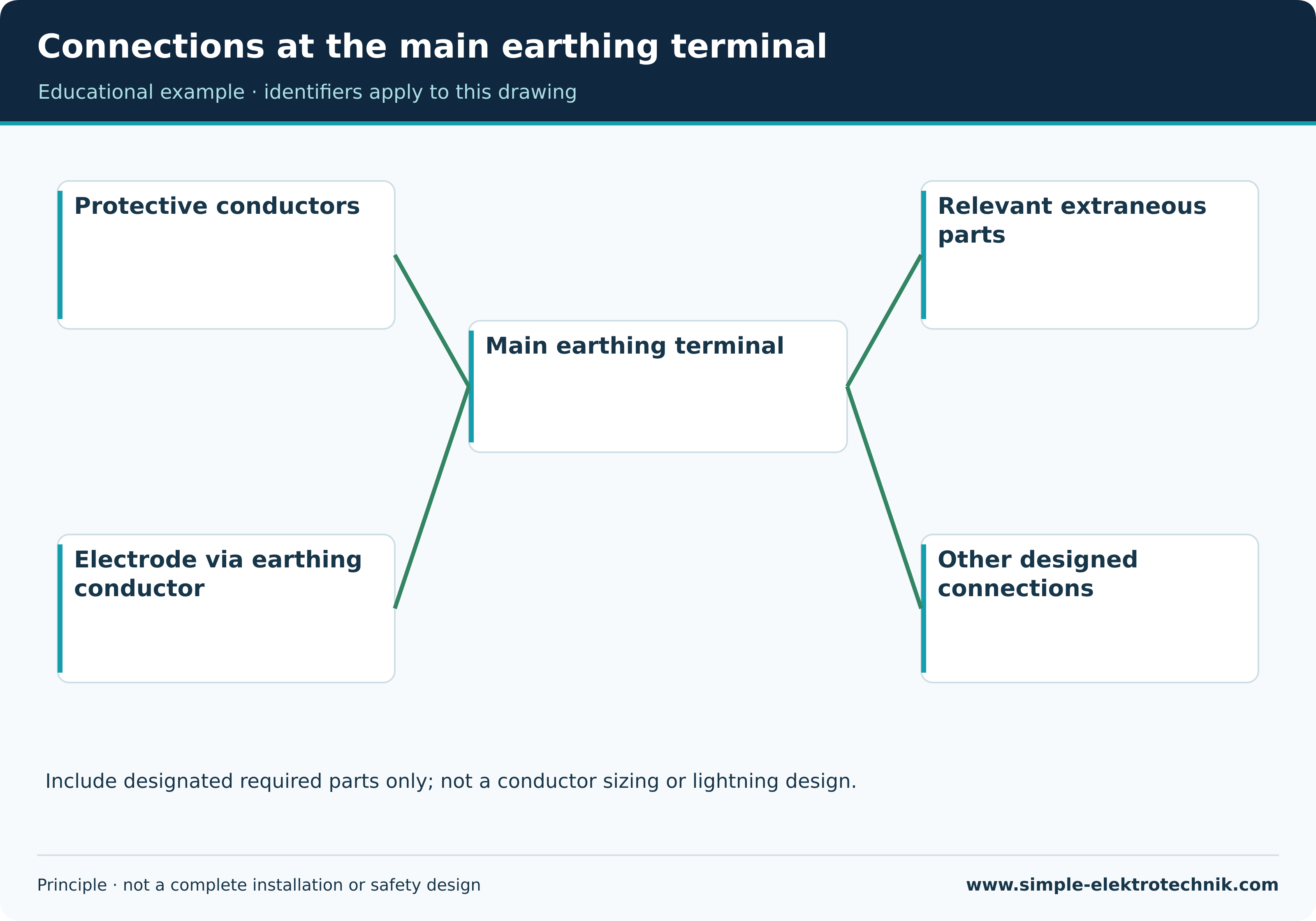
EarthingEarthing is an electrical connection to earth. Depending on its design, it can serve protective or functional purposes.
Electrodes, earthing conductors and designated connection points form the actual arrangement. Soil is not an ideal uniform zero-potential reference everywhere.
Example
An earthed source point and an earthed equipment enclosure may be connected through different paths depending on the system.
Important distinction
Earthed does not automatically mean dead. An earth connection alone is not complete protection against electric shock.
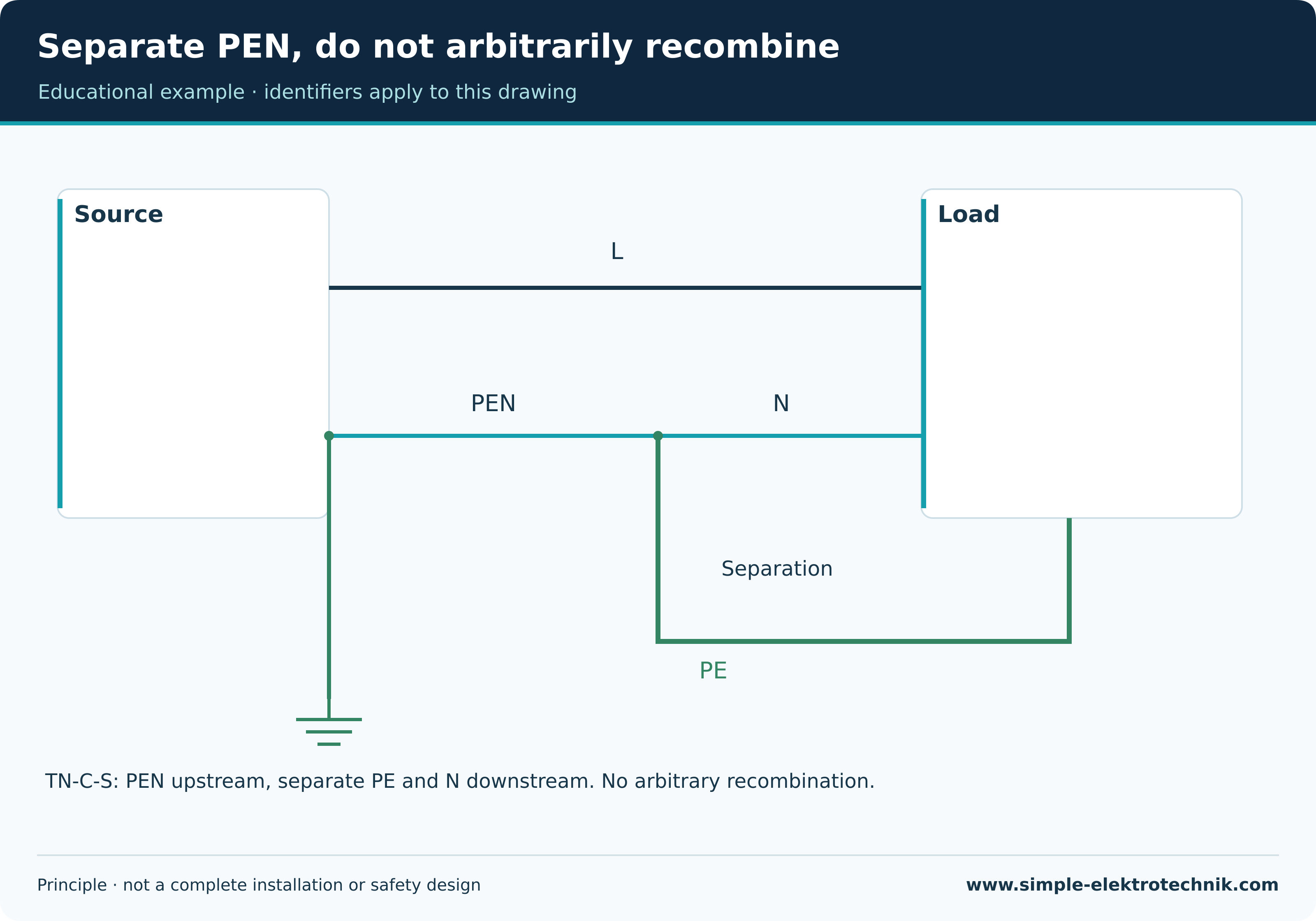
Earthing arrangementAn earthing arrangement describes, among other things, the source’s earth relationship and protective connections of exposed conductive parts.
TN, TT and IT identify different arrangements. S and C distinguish separate or combined protective and neutral functions.
Example
In TN-C-S, a combined PEN section is followed by a section with separate PE and N functions.
Important distinction
A conductor colour or simple socket tester cannot reliably establish the earthing arrangement. It influences required protective and verification assessment.
F
Fault protectionFault protection protects against electric shock under specified fault conditions, such as an insulation fault.
An intended combination of protective connections and disconnection may limit hazardous conditions. Other protective concepts may use double or reinforced insulation.
Example
If a fault energises a correctly connected Class I enclosure, the designed protective system must achieve its required effect.
Important distinction
A connected green-and-yellow conductor alone does not prove this effect. Protective path, device and installation need coordination and verification.
FuseA fuse interrupts a circuit by melting an intended element under sufficient overcurrent.
Current rating, construction, utilisation category, time-current behaviour and breaking capacity inform selection. Not every small exceedance of rated current causes immediate operation.
Example
A suitable fuse link may provide short-circuit protection within a coordinated equipment combination.
Important distinction
A fuse must not be bypassed or replaced by an arbitrary higher rating. Fault cause and correct coordination must be established.
I
IP ratingAn IP rating describes specified enclosure protection against access, solid foreign objects and water.
The first numeral concerns access or solids; the second concerns water. Conditions such as mounted, closed or mated form part of product assessment.
Example
In IP44, the two numerals are read separately rather than as the number forty-four.
Important distinction
A higher second numeral does not automatically cover every other water exposure. IP also does not establish UV resistance, chemical suitability or electrical protection class.
M
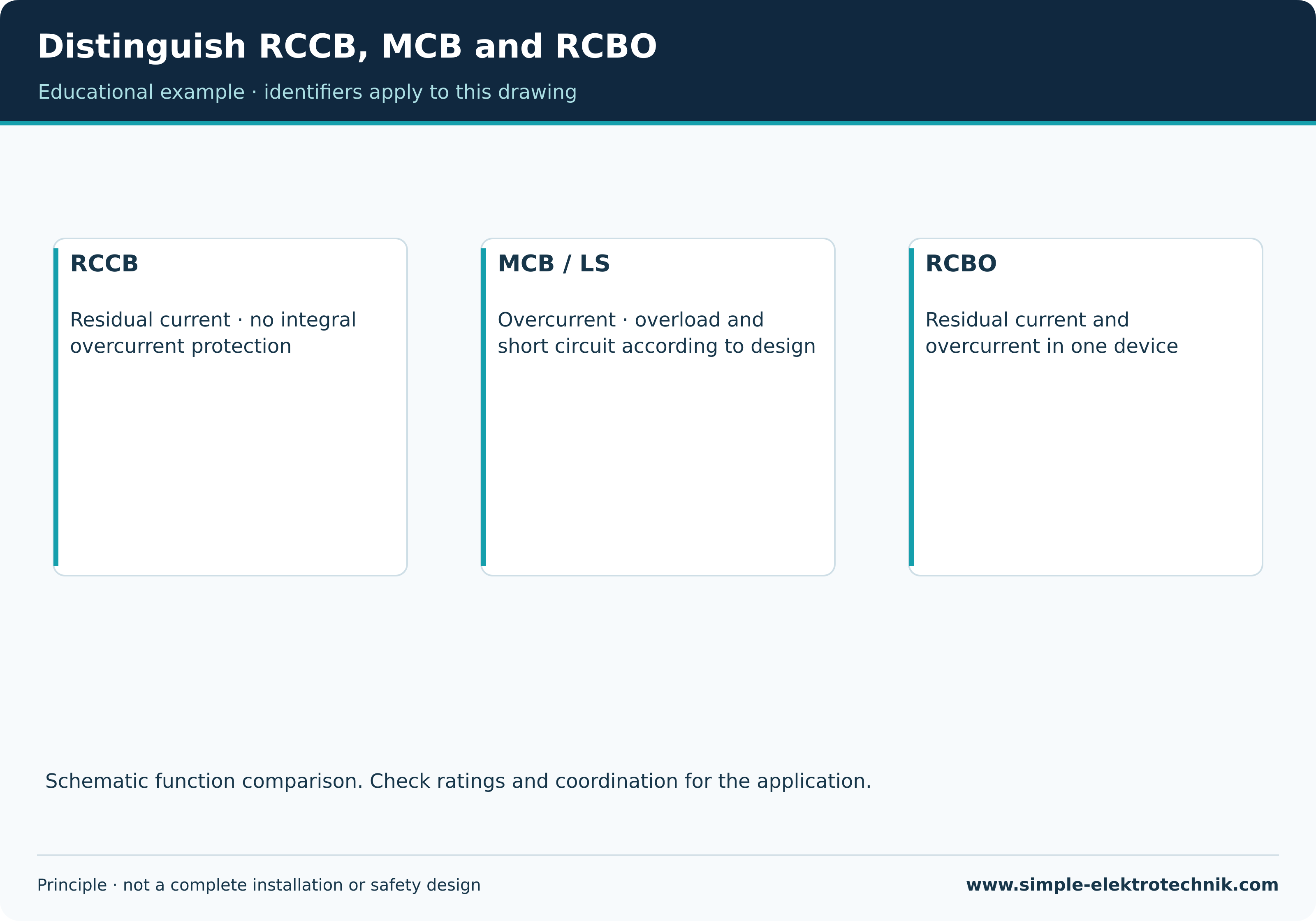
Miniature circuit-breakerAn MCB is an overcurrent protective device for its intended application.
It has a defined time-current behaviour. Common designs respond to sustained overload and sufficiently high short-circuit current through different mechanisms.
Example
Selection considers the conductor, installation conditions, load and the required disconnection verification.
Important distinction
A characteristic letter alone does not establish suitability. A higher current rating may overload an existing conductor.
O
Overcurrent protectionOvercurrent protection limits the consequences of current above the intended conditions for conductors or equipment.
Overload and short circuit impose different stresses. Suitable devices must perform the required tasks according to their design and coordination.
Example
Fuses, MCBs and other coordinated devices can form part of the protection concept.
Important distinction
A protective relay may request disconnection without interrupting the main current itself. An RCCB has no integrated overcurrent protection.
P
Protection classProtection classes identify fundamental equipment construction concepts for protection against electric shock.
Class I includes an intended protective conductor connection. Class II uses double or reinforced insulation. Class III requires suitable extra-low-voltage protective construction and supply.
Example
The double-square symbol identifies Class II. A metal enclosure alone does not establish Class I.
Important distinction
The classes are not a safety ranking. Protection class, IP rating and CE marking describe different matters.
Protective equipotential bondingProtective equipotential bonding connects designated conductive parts to limit hazardous potential differences.
Which parts must be included depends on their actual characteristics and applicable requirements. The main earthing terminal is a designated common connection point within the protective concept.
Example
An actual extraneous conductive part can introduce a potential into an area and may need inclusion accordingly.
Important distinction
Not every metal object needs automatic bonding. Bonding and earthing are related but describe different functions.
Protective relayA protective relay monitors specified quantities or states and initiates a protective response when its criteria are met.
A separate switching device may perform actual power interruption. Sensing, auxiliary supply, output and disconnection device must work together in the full concept.
Example
An overload relay may open an intended control contact and thereby release its associated contactor.
Important distinction
An ordinary relay is not automatically suitable for a validated safety function. A protective relay also does not replace every required protective measure.
Protective switching deviceProtective switching device is a broad expression that can refer to different functions unless the actual device is specified.
An MCB responds to overcurrent; a residual-current-only device responds to residual current. An RCBO combines those functions. Other devices protect motors or perform specialised tasks.
Example
When investigating a trip, first establish which actual device operated.
Important distinction
The everyday statement that a breaker tripped does not identify a definite fault type. Cause and protective function need separate assessment.
R
RCBOAn RCBO combines residual-current protection and overcurrent protection in one intended device.
Residual-current type, overcurrent characteristic, ratings and breaking capacity must suit the application. The combined form does not remove conductor or protective-connection requirements.
Example
An individual final circuit may be protected by a suitably selected RCBO.
Important distinction
RCD and RCBO are not interchangeable terms. The first describes a device family, the second a particular combined function.
RCCBAn RCCB is a residual current circuit-breaker without integral overcurrent protection.
Its rated current and rated residual operating current describe different properties. Required overcurrent protection must be coordinated with the complete combination.
Example
A circuit may use an RCCB together with suitable overcurrent protective devices.
Important distinction
A high rated current on its marking does not mean an RCCB trips on overload like an MCB at that value.
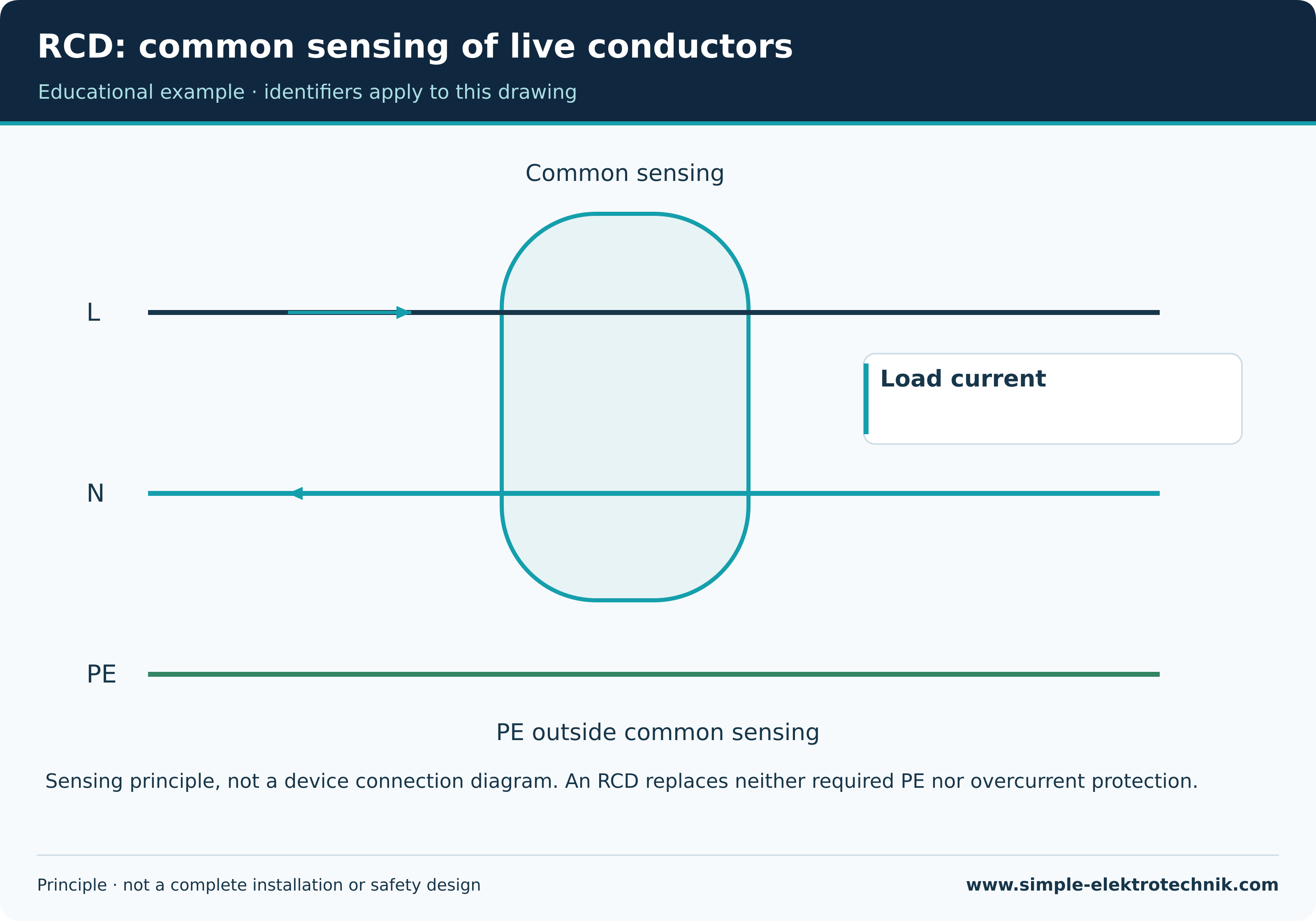
Residual current device (RCD)RCD is the general term for devices responding to a specified residual current.
Live conductors passing through the intended sensing area are considered together. Current returning through another path can create an imbalance. Device design and residual-current waveform must suit the application.
Example
An RCCB provides residual-current protection without integrated overcurrent protection; an RCBO combines both.
Important distinction
A residual-current-only device replaces neither overcurrent protection nor a required PE. It also does not detect every possible hazardous contact.
S
Surge protectionSurge protection limits specified transient overvoltages within its designed protective concept.
SPD selection, coordination, location, connection routing and earthing or bonding work together. Data and power connections may require different measures.
Example
A coordinated concept may include several protective stages within an installation.
Important distinction
A power-strip marking is not complete building lightning protection. An SPD replaces neither overcurrent nor residual-current protection.
T
Touch voltageTouch voltage is the voltage between conductive parts that a person or animal can touch simultaneously under the considered conditions.
Actual exposure and risk also depend on contact, body path, environment and duration. One voltage value therefore does not establish universally safe contact.
Example
An insulation fault may create a hazardous potential difference between an accessible enclosure and another part.
Important distinction
An earth symbol or low reading at unsuitable points does not give general reassurance. Required protection needs professional verification.
V
Verifying absence of voltageVerifying absence of voltage checks the actual electrical condition at the intended point of work using a suitable procedure.
Instrument, test points and instrument function checks must suit the task. Verification belongs within the complete safe working procedure and covers all relevant conductors.
Example
An unlit lamp or app status is not accepted as proof of absence of voltage.
Important distinction
Non-contact indicators or single-pole indications are not general substitutes for the required procedure. Absence-of-voltage verification is also distinct from complete initial verification.
No matching term. Try another spelling or select all topics.