
Smart home and communications

Smart homes combine device functions, radio networks and application protocols. This easily causes confusion. Here terms such as actuator, Matter, Thread and gateway are explained by their actual roles.
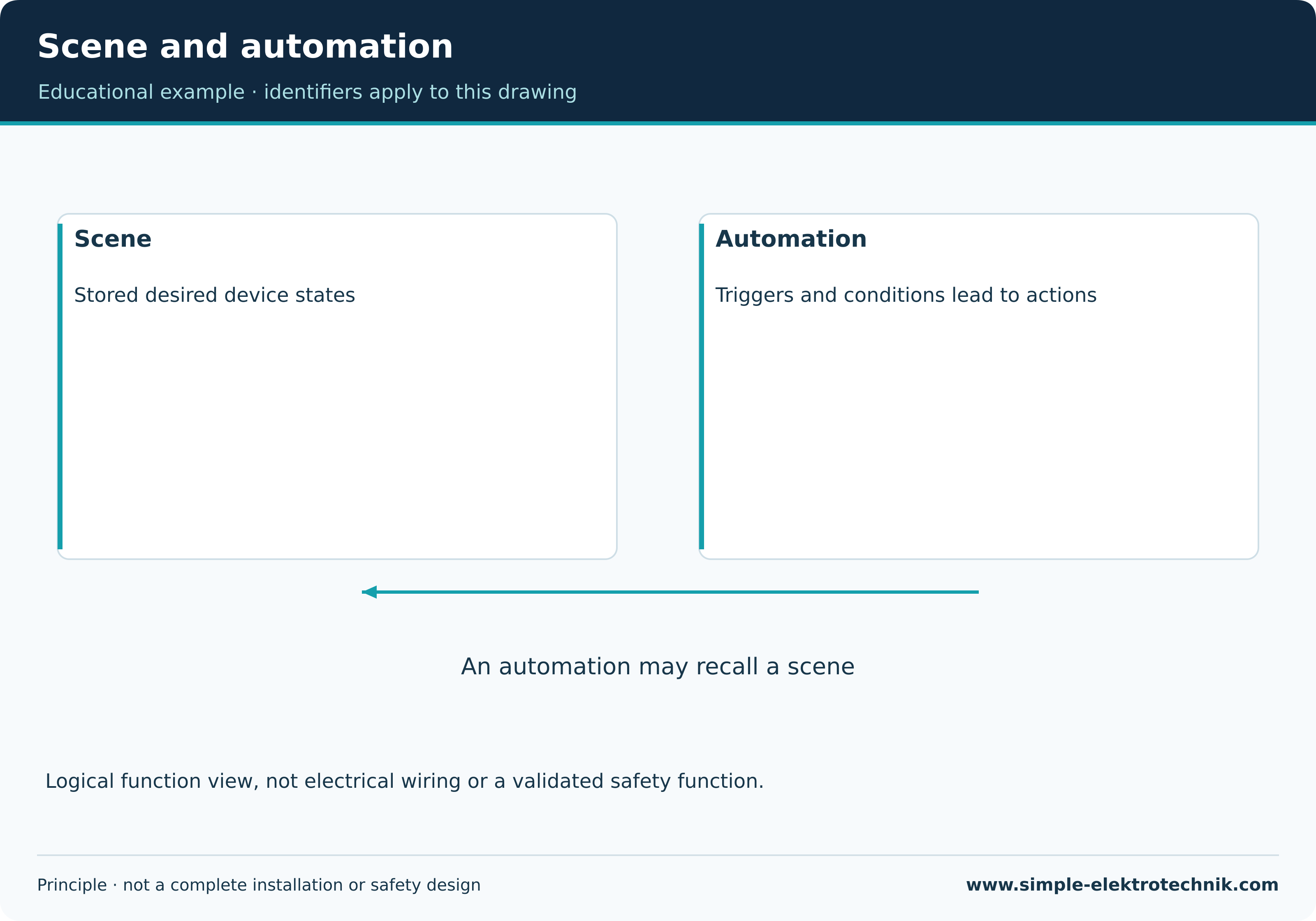
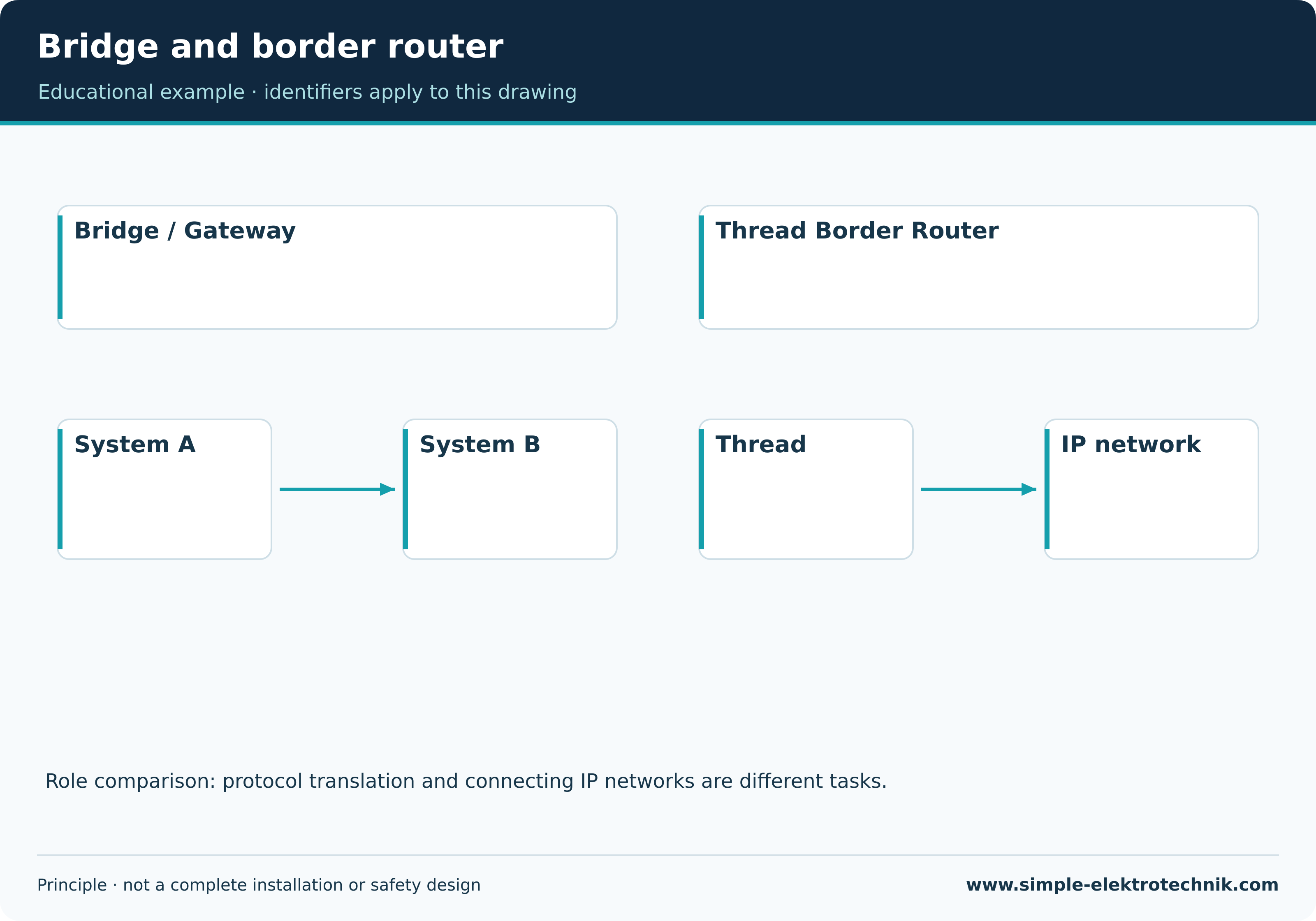
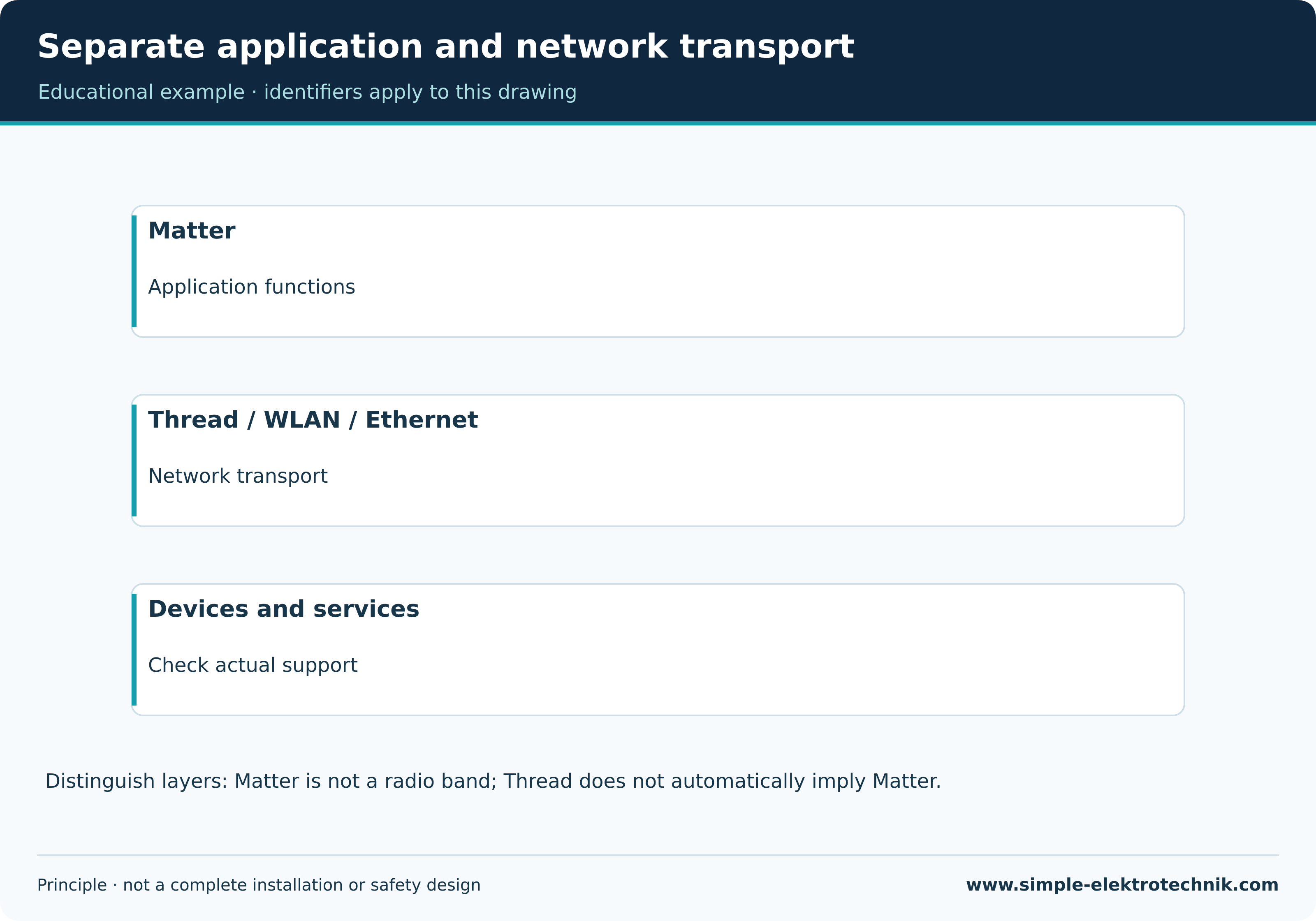
A radio standard does not guarantee every app function. A border router is not automatically a protocol bridge. We also distinguish a scene containing stored states from an automation recalling it for a particular event.
How these terms connect
Device roles, networks and what the different standards do. The short definition supports quick lookup. Open an entry for its example, important distinctions and useful references. Related terms link to further entries in the glossary.
The linked guides explain applications in greater detail. This glossary explains terminology and replaces neither product documentation nor assessment of an actual installation.
Look up a term
18 terms found
A
ActuatorAn actuator converts a control signal into an intended physical action such as switching, dimming or movement.
The load and communication sides have different requirements. Feedback, failure behaviour and manual operation should suit the use concept.
Example
A suitable heating actuator changes a valve state, while a switching actuator controls an intended circuit.
Important distinction
An app button does not prove safe load isolation. An actuator is not automatically suitable for every motor or LED load.
AutomationAn automation links defined triggers and conditions to intended actions.
Triggers, state checks, timing and failure behaviour should be understandable. Manual controls and automatic rules should not conflict unpredictably.
Example
A motion event may recall a lighting scene only when sufficiently dark.
Important distinction
More rules do not automatically make better control. An ordinary smart-home automation is not a validated machine safety function either.
B
Bus systemA bus is a communication system through which compatible participants exchange data under defined rules.
Physical transmission, addressing and communication depend on the system. Shared communication does not automatically imply arbitrary shared power supply.
Example
A building bus may carry control commands from sensors to suitable actuators.
Important distinction
Similar terminals or cables do not prove protocol compatibility. Bus rules, supply and isolation must follow the actual system.
E
EthernetEthernet describes a family of local data-link technologies, commonly carried over suitable copper or optical-fibre links.
Connector type, cabling category, transmission variant and equipment must match. IP can operate above Ethernet and is not the same thing.
Example
A suitable switch connects multiple Ethernet participants within the intended network structure.
Important distinction
An RJ45-like connector does not prove every Ethernet or PoE approval. Other systems may use similar connectors.
G
Gateway and bridgeGateway and bridge describe connection roles between networks or systems. Their precise function depends on product and context.
Application-protocol translation is different from merely forwarding network packets. A hub may combine several roles.
Example
A suitable Matter bridge may expose particular devices from another system to Matter.
Important distinction
The terms do not guarantee general compatibility. A Thread Border Router does not thereby translate arbitrary Zigbee devices into Matter.
I
IP addressAn IP address provides addressing within an IP network. IPv4 and IPv6 use different address formats.
Address, network range and routing affect reachability. A local address is not automatically reachable from the internet.
Example
A device may have a home-network address yet fail to connect to an external service.
Important distinction
IP in networking means Internet Protocol. IP in an enclosure protection rating describes a completely different matter.
K
KNXKNX is a standardised building-automation system with defined communication and device functions.
It can use different designated transmission media. Design, parameterisation, supply and device association form part of the actual installation.
Example
A suitable KNX sensor can send commands to correspondingly configured actuators.
Important distinction
KNX is not one app or an arbitrary two-wire connection. Changes can require knowledge of configuration and protective requirements.
L
Local control and cloud servicesLocal control processes intended functions within the local system. Cloud functions additionally use external services.
Which functions work without internet needs verification for the actual combination. Operation, automations, remote access and setup may have different dependencies.
Example
A local lighting rule may continue while a cloud-based voice function fails during an internet outage.
Important distinction
A radio standard alone does not guarantee complete offline operation or privacy. Integration, accounts and platform functions also matter.
M
MatterMatter is an IP-based application protocol for interoperable functions between compatible smart-home devices and systems.
It can use suitable transports such as Thread, Wi-Fi and Ethernet. Actual available functions depend on equipment, supported features and participating systems.
Example
A suitable device may join a supporting ecosystem without every manufacturer-specific extra function necessarily appearing there.
Important distinction
Matter is not a radio band and is not the same as Thread. A Matter mark does not promise every imaginable function in every app.
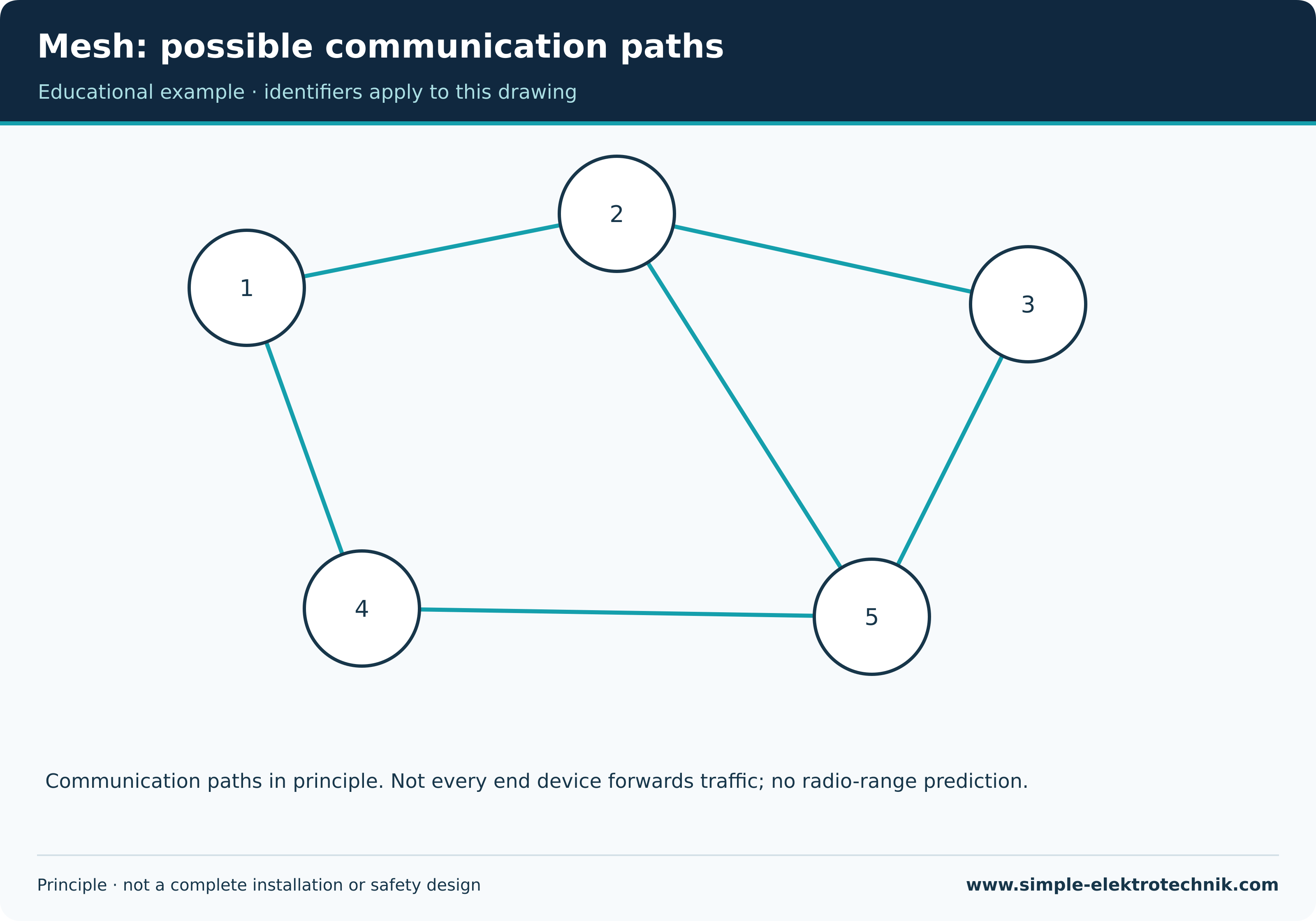
Mesh networkIn a mesh network, suitable participants can forward data through other participants.
Which devices forward traffic and which act only as end devices depend on system and role. Radio quality and suitable paths remain important.
Example
A powered suitable router may provide additional communication paths for a wireless network.
Important distinction
More devices do not automatically improve every network. A battery sensor is not a router merely because it participates.
N
NetworkNetwork is context-dependent. An electrical network connects components; a data network connects communicating participants.
Series and parallel arrangements may be parts of an electrical network. Smart-home discussion more often concerns addressing, transmission and communication roles.
Example
Troubleshooting a data network examines different relationships from resistance calculation in an electrical network.
Important distinction
Similar terminology must not blur the level of discussion. Supply, protection and data communication need separate understanding.
O
Optical fibreAn optical fibre guides light to transmit information or perform other intended optical tasks.
A cable may contain multiple fibres and additional protection or strength members. Fibre type, connectors, bend radius and optical equipment need to match.
Example
A suitable fibre link may connect two Ethernet devices through matching optical interfaces.
Important distinction
A fibre and a complete cable are different. Do not look into unknown optical connectors; potentially invisible optical radiation requires care.
S
SceneA scene is a stored combination of desired device states.
It can be recalled to set several devices together. Recall may be manual or initiated by an automation.
Example
An evening scene may dim selected lights and switch others off.
Important distinction
A scene alone does not necessarily define the trigger or decision about when to activate it. That belongs to operation or automation.
SensorA sensor detects a physical or other specified quantity and produces a usable signal from it.
Sensing principle, coverage, mounting and processing determine the information actually available. A reported state may also be filtered or delayed.
Example
A temperature sensor provides information on which heating control may act.
Important distinction
A sensor indication does not directly prove every real state. A motion detector, for example, does not automatically detect every stationary person.
T
ThreadThread is an IP-based wireless networking protocol for suitable connected devices and uses a mesh structure.
Network transport and application protocol are different. Suitable device roles and a border router support connection to adjacent IP networks.
Example
A Matter device may use Thread as transport while Matter describes the device functions above it.
Important distinction
Not every Thread device is automatically a Matter device. Nor does every battery-powered participant act as a forwarding router.
Thread Border RouterA Thread Border Router connects a Thread network with adjacent IP networks such as a home network.
The role concerns network transport. A device may additionally contain a Matter controller or other functions, but those roles are not identical.
Example
A suitable Thread device may communicate through the border router with compatible participants outside its radio network.
Important distinction
Border router is not a synonym for Matter bridge. Each logo on a device needs consideration of its actual function.
W
Wi-FiA wireless LAN is a local wireless network. Wi-Fi is commonly used in connection with compatible wireless networking products.
Coverage, supported bands, security and configuration affect operation. A connected device may communicate locally or additionally require an internet service.
Example
A Wi-Fi socket may be connected to the home network while its app function depends on a particular platform.
Important distinction
Wi-Fi connection and internet access are different. A strong radio signal also does not prove working cloud connectivity.
Z
ZigbeeZigbee is a family of standardised communication solutions for compatible connected devices, often using wireless mesh networking.
Device roles, profiles and actual supported functions determine interaction. A coordinator or suitable system connection may be needed for the intended use.
Example
A compatible sensor may report events to a suitable hub that initiates a lighting action.
Important distinction
Zigbee and Thread are different communication systems even if some radio foundations are similar. A radio logo alone does not guarantee complete feature compatibility.
No matching term. Try another spelling or select all topics.